
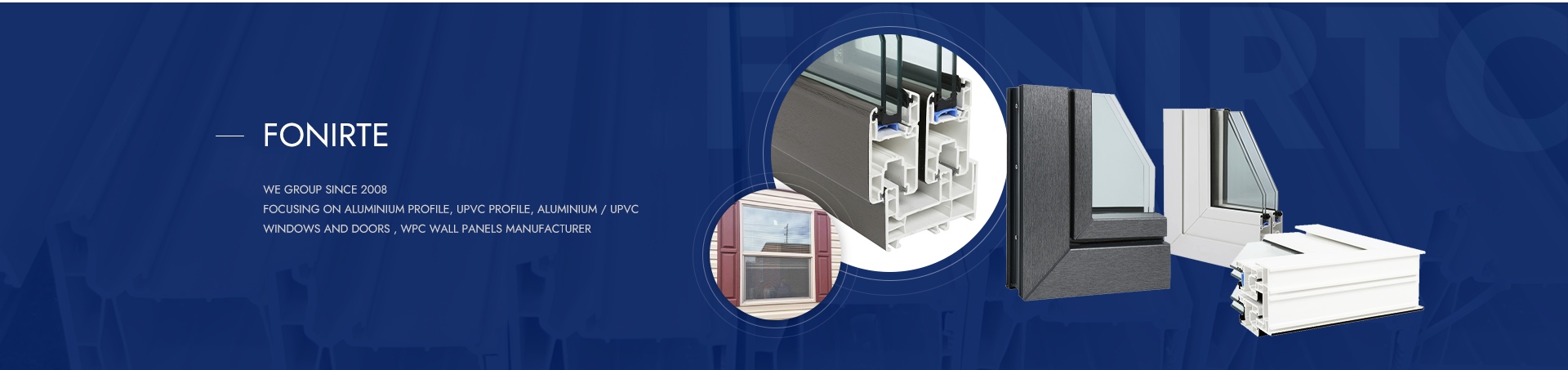
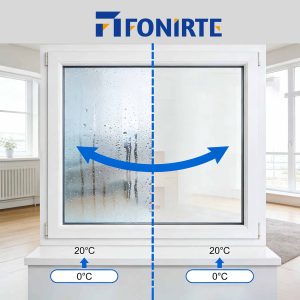
FONIRTE multi-chamber UPVC window profile preventing condensation.
Why Your Windows Sweat: The Science of Condensation & The UPVC Solution
Windows are the “thermal frontline” of your home. When winter hits, many homeowners struggle with “sweating” glass and damp frames. While a little fog might seem harmless, persistent moisture can lead to mold and structural damage.
Understanding the science behind condensation—and why UPVC window profiles are the ultimate defense—can help you maintain a healthier, warmer home.
1. The Science of Condensation: Why It Happens
Condensation occurs when warm, moisture-laden indoor air meets a surface colder than the air’s dew point.
-
The Humidity Factor: Daily activities like cooking, showering, and even breathing add liters of moisture to your indoor air.
-
Surface Temperature: When this humid air touches a cold window pane, the gas turns into liquid droplets.
-
What is “Normal”? Seeing a light mist on the glass during extreme cold (e.g., -20°C outside) is a natural physical reaction. However, if water is pooling on the frame or running down the walls, you have a thermal bridging problem.
2. The UPVC Advantage: Why FONIRTE Frames Stay Dry
Traditional materials like aluminum are high conductors, meaning they “carry” the outside cold directly into your home. FONIRTE UPVC profiles are engineered to break this cycle.
Thermal Break by Design
UPVC is naturally a poor conductor of heat. FONIRTE’s multi-chamber structure creates internal air pockets that act as a barrier, keeping the interior surface of the frame significantly warmer than the outdoor temperature.
Smart Steel Reinforcement
While strength is vital, metal can create “cold spots.” In FONIRTE engineering, galvanized steel reinforcement is strategically isolated within insulated chambers. This prevents the steel from acting as a thermal bridge, ensuring the frame remains dry even in freezing conditions.
3. High-Performance Glazing: The Perfect Partner
A superior frame needs superior glass. To minimize condensation, FONIRTE windows utilize advanced Insulating Glass Units (IGUs):
-
Double & Triple Glazing: Using configurations like 5+12A+5, where the “A” represents an Argon gas fill, provides a massive boost in thermal resistance.
-
Low-E Coatings: Low-Emissivity glass reflects indoor heat back into the room. This raises the temperature of the inner glass pane, keeping it above the dew point.
-
Warm Edge Spacers: By insulating the edges of the glass—the traditionally coldest spot—the entire window system works in synergy to prevent moisture buildup.
4. 3 Practical Tips to Manage Winter Humidity
Even the best energy-efficient windows can’t stop physics if indoor humidity is too high. Use these tips to keep your home dry:
-
Controlled Ventilation: Open your windows wide for 5-10 minutes daily. This “cross-ventilation” replaces damp air with dry outdoor air without losing significant floor heat.
-
Monitor Your Hygrometer: Aim for an indoor relative humidity of 40-50%. Always use extractor fans when cooking or showering.
-
Wipe and Dry: If a light mist appears during a cold snap, a quick wipe with a microfiber cloth is enough. Thanks to the insulation in FONIRTE systems, this moisture will evaporate rapidly as the room warms.
Conclusion: Exceptional Warmth and Peace of Mind
No window can completely defy the laws of physics, but a well-engineered UPVC window system from FONIRTE dramatically reduces the risk of dampness. By keeping frame surfaces warm and glass edges insulated, you aren’t just buying a window—you’re investing in a drier, healthier, and more energy-efficient home.
FONIRTE – Keeping you warm, dry, and informed through every season.


